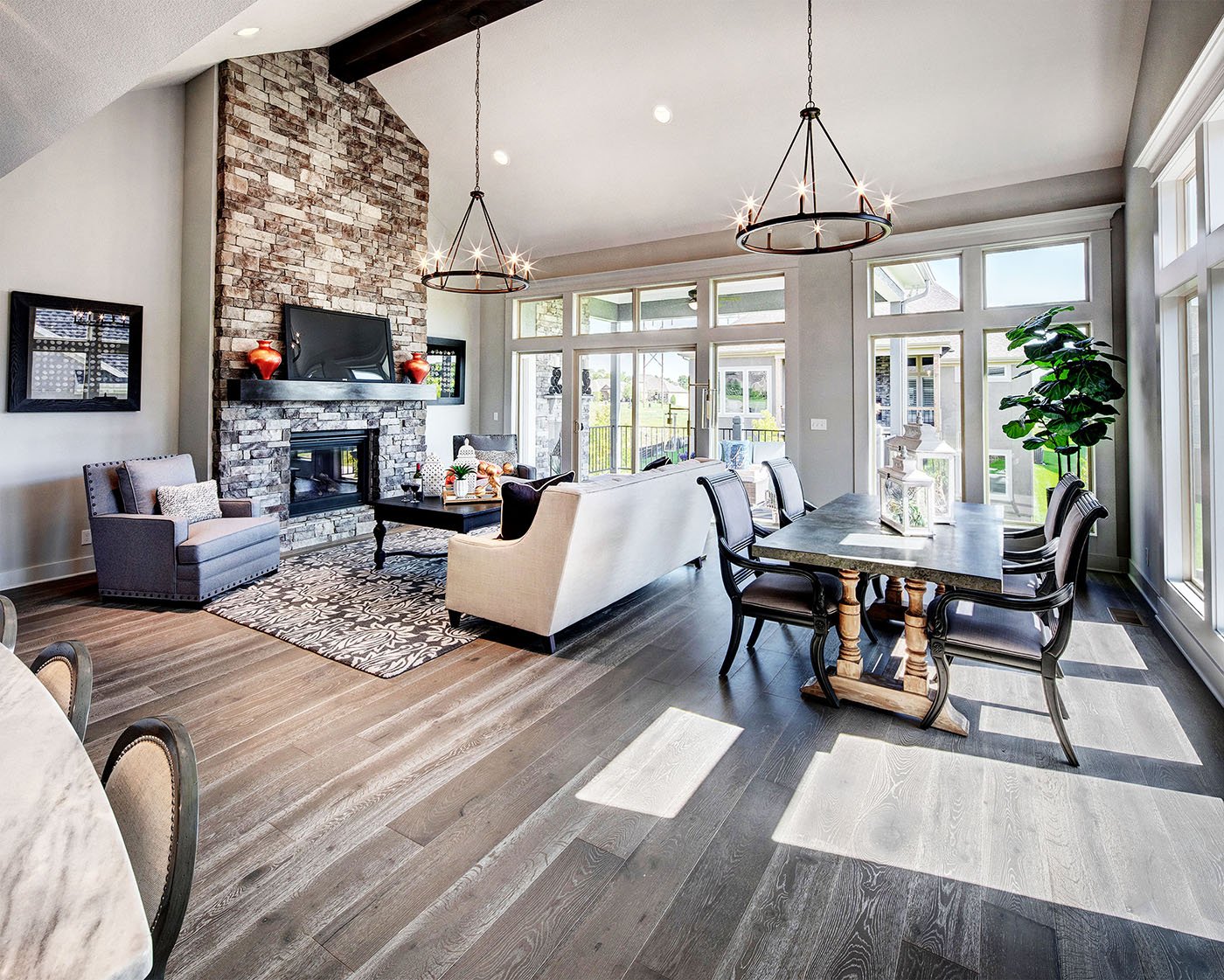


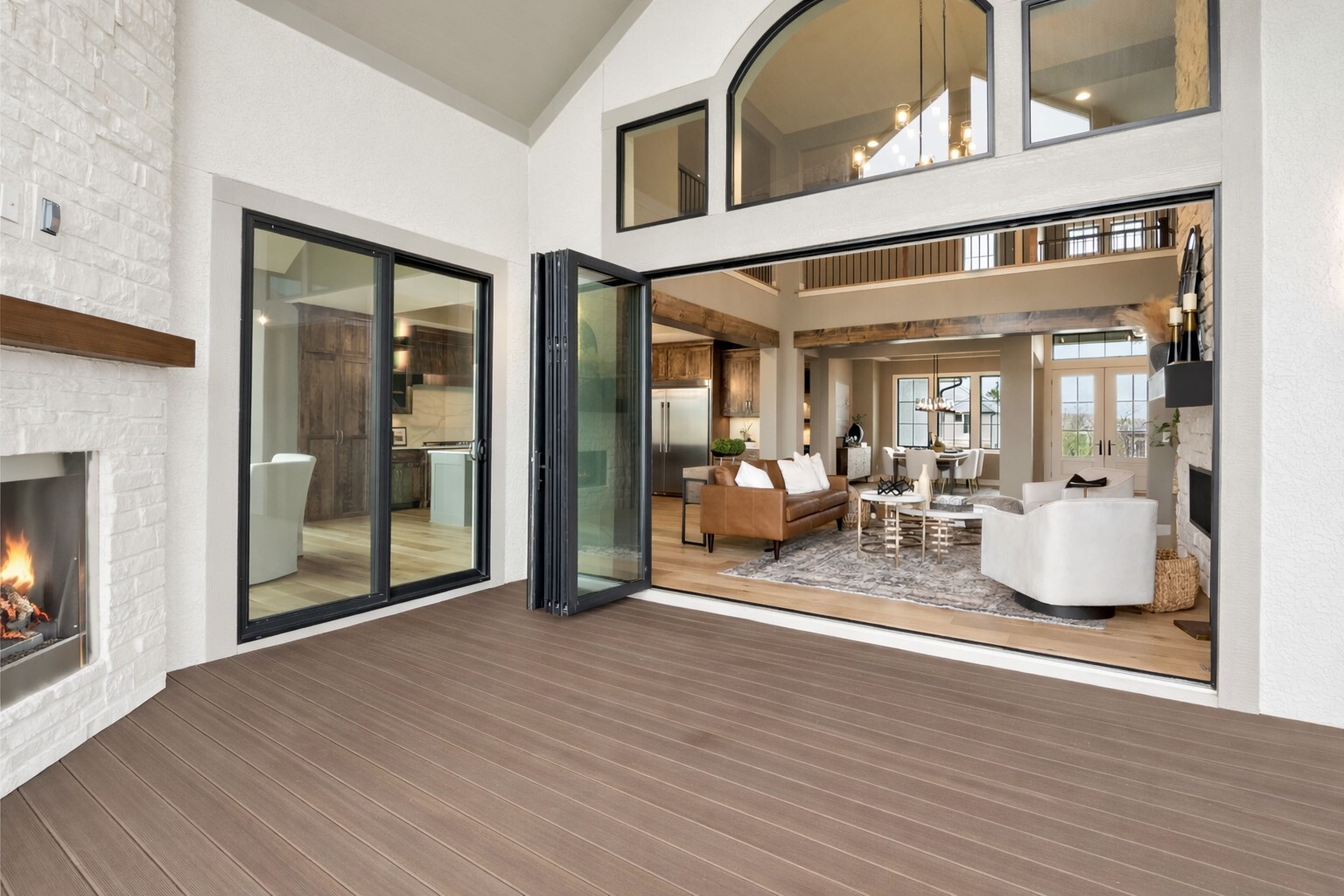
Outdoor living should not feel like an afterthought. In the best custom homes, it is built into the plan from day one.
A patio, outdoor kitchen, or backyard retreat will only feel connected if the home is intentionally designed with seamless transitions between indoor and outdoor spaces. That means thinking beyond finishes and features to focus on how the layout, sightlines, and flow work together to create a natural extension between indoor and outdoor spaces.
In this blog, we’re breaking down how to plan for better indoor-outdoor flow before you finalize the blueprint.
Use the links below to navigate to the sections that interest you:
- Why Indoor-Outdoor Flow Matters in a Custom Home
- How to Plan Indoor-Outdoor Living Around Your Lifestyle
- Best Custom Home Layout Ideas for Indoor-Outdoor Flow
- Patio Doors and Windows That Improve Indoor-Outdoor Connection
- Design Details That Help Indoor and Outdoor Spaces Feel Unified
- Outdoor Living Spaces for Custom Homes: Think Beyond One Patio
- How to Make Outdoor Living More Comfortable Year-Round
- Why the Kitchen Plays a Big Role in Outdoor Entertaining
- How Sightlines Make a Custom Home Feel Bigger and Brighter
Why Indoor-Outdoor Flow Matters in a Custom Home
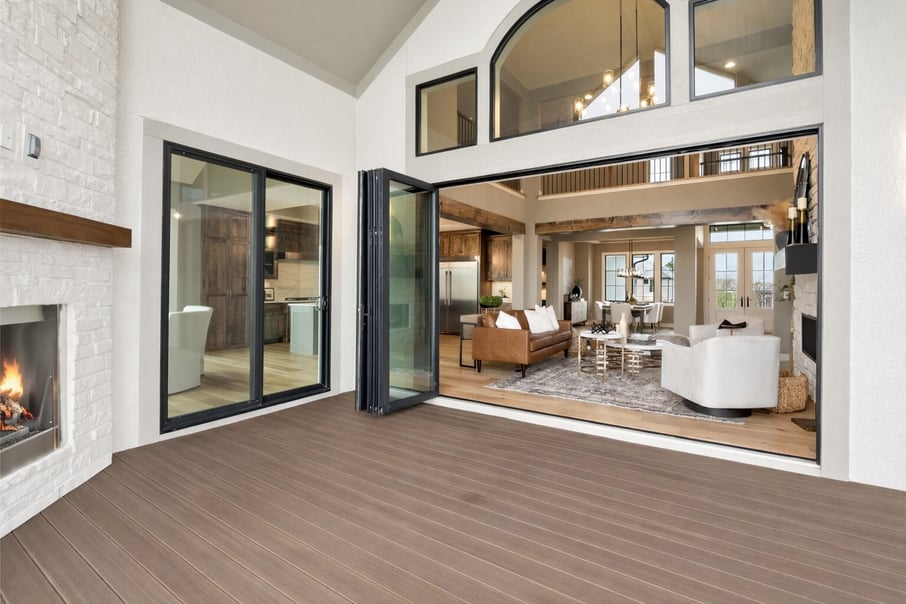
A home with strong indoor-outdoor flow does more than look beautiful. It changes the way the home feels and functions every day. For many families, outdoor living is no longer just an extra feature. It is a priority and sought after for custom homes.
When indoor and outdoor spaces work together well, homeowners often gain:
- More usable living space
- Easier entertaining
- Better natural light
- Stronger views throughout the home
- A greater connection to the lot itself
- A home that feels expansive, connected, and intentional
How to Plan Indoor-Outdoor Living Around Your Lifestyle
Before choosing patio materials, door systems, or outdoor features, it helps to think about your daily life first.
Ask yourself:
- Do you imagine hosting for friends and family?
- Do you want a quiet covered patio for morning coffee?
- Are you planning for outdoor dining?
- Do you want a patio, outdoor fireplace, or covered deck?
- Would features like screens for bug protection or an outdoor fan for extra comfort add value to your daily routine?
The answers to these questions should guide the design. A family that loves entertaining may want wide openings between the great room and the patio. A homeowner focused on relaxation may prefer multiple outdoor spaces with different purposes.
Best Custom Home Layout Ideas for Indoor-Outdoor Flow
One of the most effective ways to improve indoor-outdoor flow is to place the right rooms next to the right outdoor spaces.
Here are some of the most common layout pairings:
| Interior Space | Outdoor Connection | Why It Works |
|---|---|---|
| Kitchen | Outdoor dining area or grill station | Makes serving meals and hosting easier |
| Great room | Covered patio or lounge area | Encourages natural flow for daily living and entertaining |
| Dining room | Patio or courtyard | Extends mealtime beyond the walls of the home |
| Primary suite | Private patio or garden retreat | Creates a more personal, relaxing escape |
| Bonus room | Outdoor spaces become entertainment areas | Supports casual gatherings and family activities |
Patio Doors and Windows That Improve Indoor-Outdoor Connection
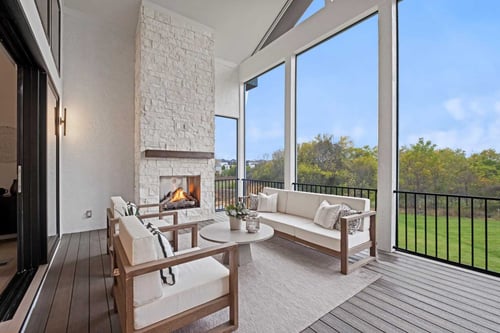
The transition between indoors and outdoors has a major impact on how connected the spaces feel. A standard back door may offer access, but it rarely creates the same visual and functional effect as a larger, more intentional opening.
Popular options include:
- Multi-slide glass doors for wide, open transitions
- Folding glass doors for a dramatic opening between spaces
- French doors for a more classic architectural look
- Large fixed windows to frame views and bring in more natural light
These features do more than add style. They improve sightlines, support easier movement, and help the home feel more open even when the doors are closed.
Design Details That Help Indoor and Outdoor Spaces Feel Unified
Floor plans matter, but materials and design details matter too. A strong indoor-outdoor experience often comes from visual consistency. That does not mean everything inside and outside needs to match exactly. It means the transition should feel intentional.
For example, a covered patio ceiling that echoes wood accents used inside the home can make the outdoor space feel like an extension of the interior rather than a completely separate area.
Other design elements that help create that unifying effect include:
- Complementary or consistent materials and tones
- Repeating indoor finishes outdoors
- Coordinating ceiling treatments, lines, or beams to visually connect the spaces
- Cohesive trim details
- Lighting and decor that feel stylistically related in indoor and outdoor spaces
Outdoor Living Spaces for Custom Homes: Think Beyond One Patio
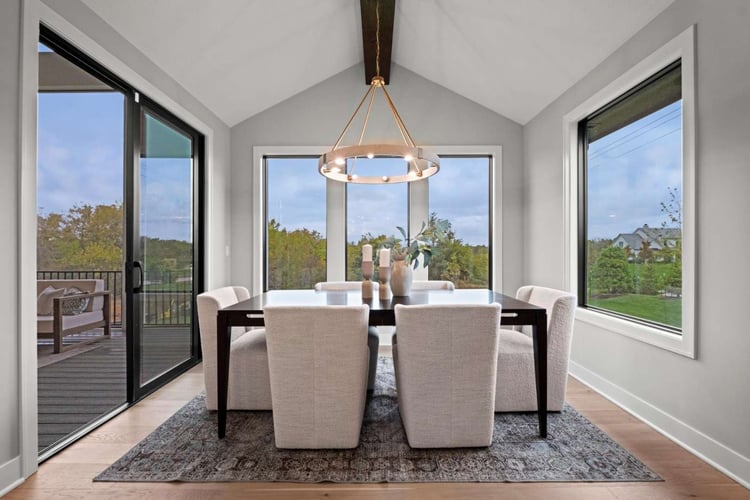
Many homeowners begin with a vision for a single patio or porch. In reality, some of the most successful custom homes include multiple outdoor zones designed for different activities.
That might include:
- A covered dining space near the kitchen
- A lounge area with a fireplace
- A private patio off the primary suite
- A screened porch
- A poolside gathering area
- A courtyard or garden retreat
Instead of asking, “Where should we put the patio?” it is often better to ask, “How many different ways do we want to use the outdoors?”
That shift in thinking can lead to a much more functional and personalized design.
How to Make Outdoor Living More Comfortable Year-Round
Even the most beautiful outdoor space will not get used often if it is uncomfortable. Comfort should be part of the planning process from the beginning.
Here are a few of the most important factors to consider:
| Comfort Factor | Why It Matters |
|---|---|
| Shade | Helps reduce heat and sun exposure during the day |
| Sun orientation | Affects how pleasant the space feels from morning to evening |
| Wind exposure | Can make seating or dining areas less usable |
| Privacy | Makes outdoor living feel more relaxing and personal |
| Weather protection | Extends the usability of the space through more seasons |
| Heating and cooling features | Improves comfort during hotter and cooler months |
Why the Kitchen Plays a Big Role in Outdoor Entertaining
In many homes, the kitchen is the center of activity. It is also one of the most important connection points for indoor-outdoor living.
When the kitchen opens directly to an outdoor dining or gathering area, it becomes easier to:
- Host guests without feeling disconnected
- Serve meals efficiently
- Move between indoor and outdoor spaces during events
- Support features like outdoor kitchens or grill stations
- Make everyday family meals outside more convenient
How Sightlines Make a Custom Home Feel Bigger and Brighter
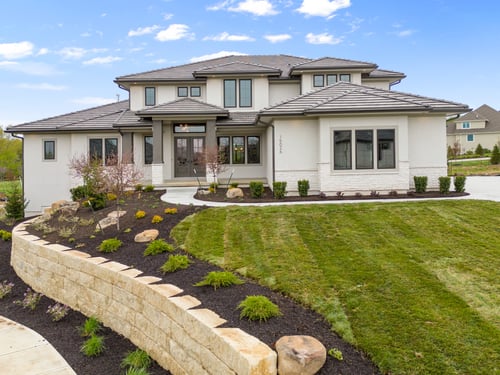
Not every connection between indoors and outdoors is about direct access. In many cases, the visual relationship matters just as much.
Well-planned sightlines can make a home feel:
- More open
- More expansive
- More connected to the property
- Brighter and calmer throughout the day
Looking through the entry toward a landscaped backyard, seeing a pool from the kitchen, or framing mature trees through large windows in the great room can all change the feeling of the home. The landscape itself plays an important role in those views, which is why many homeowners plan their outdoor spaces and planting strategy alongside the home's design rather than after construction is complete.
Start Planning Outdoor Living Before You Finalize the Blueprint
The best outdoor living spaces are not added after the fact. They are built into the vision of the home from the very beginning.
When indoor and outdoor spaces are designed together, the result is a custom home that feels more open, more natural, and more aligned with the way you want to live. Room placement, sightlines, materials, comfort features, and entertaining spaces all work together to create a home that feels unified inside and out.
If outdoor living is a priority for your future home, the smartest move is to plan for it before you settle on a final blueprint. The earlier you think through layout, function, and comfort, the more likely you are to end up with a home that supports the way you actually want to live.
Build Your Dream Space with Dusty Rhodes Homes
At Dusty Rhodes Homes, we understand that outdoor living is not just about adding a patio or porch. It is about creating a home that feels connected, functional, and tailored to the way you want to live.
Since 1966, Dusty Rhodes Homes has built more than 2,000 homes in the Kansas City metro area and earned hundreds of Home Builders Association Pick of the Parade and Best Design awards.
As a true design-build company, we have multiple in-house designers who collaborate on every project. We include interior design in our process, and we create plans with both aesthetics and build efficiency in mind. Our integrated approach allows clients to enjoy a fully coordinated design experience without the need for separate architects or outside decorators.
Take a virtual tour of our available properties to see what we can build for you.
Contact Us
Connect with our team to get started with your custom home. If you have additional questions about our work, please visit our FAQs page.